案例库
Buttondown:前 100 位订阅者免费,12 项功能拆成加购
Buttondown 由 Justin Duke 与 14 人远程团队运营、法人主体是 Buttondown, LLC:前 100 位订阅者免费,之后按活跃订阅人数分档($9/$29/$79/$139 起),12 项功能按月加购;官方还把 57 个工具的年度成本 $86,406 公开在站点上,但当前收入与客户数未公开。
前 100 位免费,之后按活跃订阅人数分档加加购。

产品实景
产品长什么样
以下截图来自产品官方公开页面,用来说明产品用途,不代表合作、背书或经营结果证明。
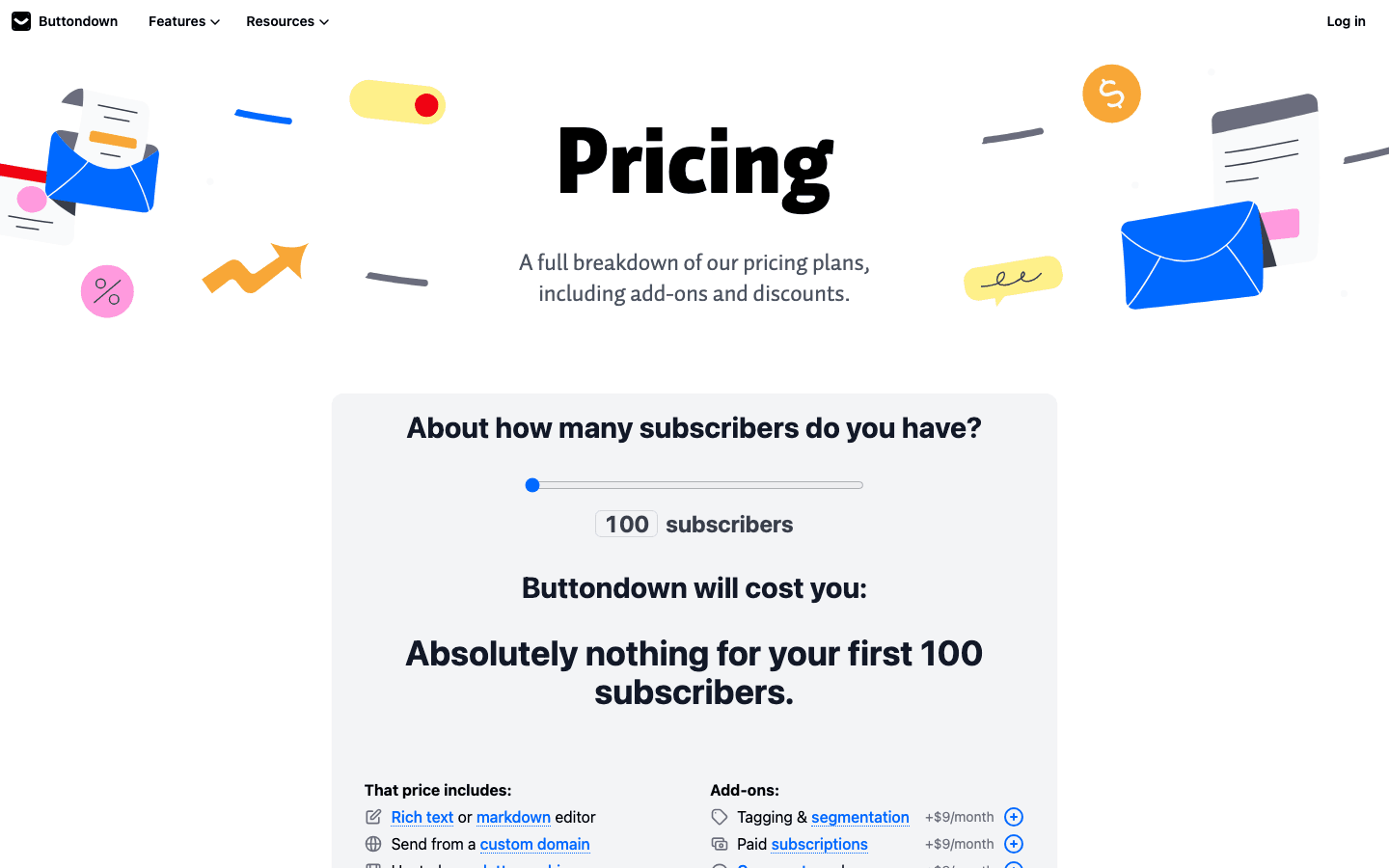
Buttondown: Pricing
定价页首屏:H1「Pricing」、滑杆停在 100 位,「Buttondown will cost you: Absolutely nothing for your first 100 subscribers.」与「That price includes:」的免费档权益;加购清单只露出最上两三行,金额在视野外。
Buttondown 官方定价页 · 访问于 2026/10/1
查看官方产品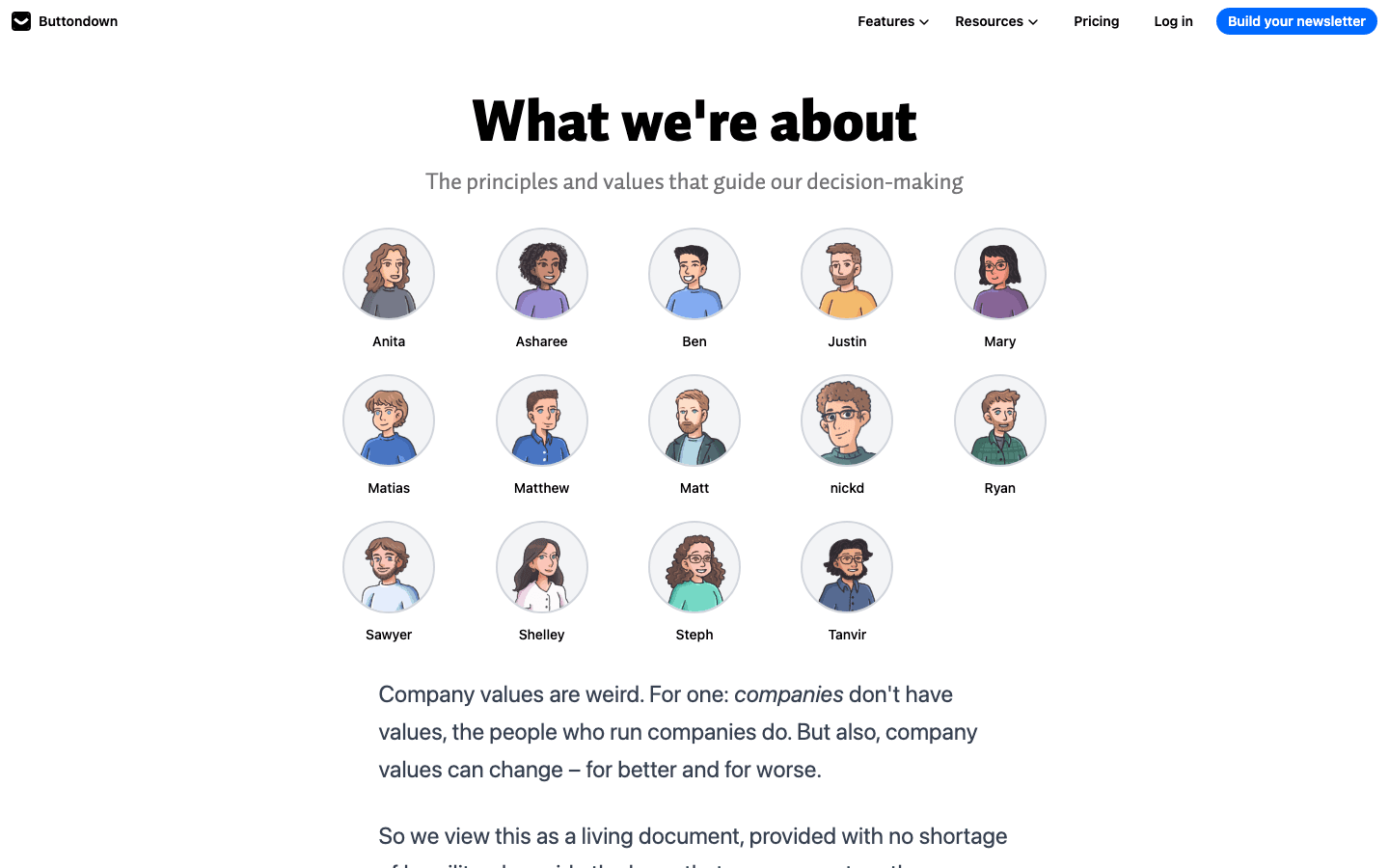
About Us — Buttondown
About 页首屏:H1「What we're about」、三排共 14 位团队头像(图片 alt 里是全名)与其名,以及「Company values are weird…」开头;「We are funded by our customers.」等原则段落在视野外。
Buttondown 官方 About 页 · 访问于 2026/10/1
查看官方产品60 秒结论
一分钟看懂这篇文章
前 100 位免费,之后按活跃订阅人数分档加加购。
人负责
- 14 人具名团队
- 支持政策写明不做什么
- 定价由创始人公开复盘
AI 负责
- 产品明确拒绝 AI 客服
- 内部工具账单含 Anthropic
- AI 供应商不在子处理者名单
- 复核全部来源
- 重渲染定价滑杆
- 点数内容矩阵
- 标注未公开项
直接结论
Buttondown 是一个邮件通讯(newsletter)托管服务:写稿、发信、自定义域名、网页存档、订阅者管理、付费订阅、自动化与 API。它值得一人公司看的地方,不在功能表,而在三个公开写出来、可以直接核对的经营动作:
- 免费层的截点写在成本上。 定价页原文是「Absolutely nothing for your first 100 subscribers.」,超过 100 位之后按活跃订阅人数分档计价,并为 12 项功能按月加购(7 项 +$9、3 项 +$29、2 项 +$79)。官方同时写清了为什么不做更宽松的免费档。
- 把「不做什么」写成公开政策。 支持政策逐条列出不支持的请求类型;替代品页直接推荐竞品 Kit、Ghost、Listmonk、Patreon,并写「We would rather do a few things exceptionally well than make something that’s for everyone.」
- 把工具成本公开出来。
/stack页写着「$86,406 / yr · 57 tools」,逐项列出月度金额,每条增删都带日期。
这三件事背后是一家14 人具名团队运营的独立公司(官方 About 页 14 个名字、Support 页 4 个名字),法人主体是 Buttondown, LLC,创始人兼「creator of Buttondown」是 Justin Duke。本文按 lean-team-reference 收录,不写一人公司。
证据状态
- 当前公开事实(2026-10-01 本轮逐字复核;候选的 3 个 URL 发布时重新验证为 200,另新增 18 个来源,合计 21 个 URL 全部 200、无跳转挑战页):定价页的免费档与加购项、About 页的 14 人名单与原则段、Support 页的角色说明、品牌页的一句归属、
/stack页的成本清单与 changelog、支持政策的「不能支持」清单、子处理者名单、sitemap 的 852 个 URL 分布。 - 本文用浏览器重新渲染过的数字:定价页的计价滑杆是前端组件,页面初始文本只写免费档。本文在 1440×900 视口下拖动滑杆,逐档读出渲染结果(见下表),并与页面内嵌的结构化数据(
application/ld+json)互相印证。 - 官方自述(未经独立审计):「We are profitable.」「We are funded by our customers」「We’re profitable, self-funded」「Trusted by…」(本文未采用任何客户数口径,官方也没有公布客户数)。
- 带时点的历史数字:2023-02-09 博文的「low five figures of monthly revenue」;2023-03-28 博文的转化率与 LTV(5%/$455、8.5%/$397、9.2%/$511)。这些都不是 2026 年的现状。
- 本文的编辑判断:把「免费档截在 100 位」+「明确拒绝更宽松的免费档」读成同一套成本纪律;把支持政策与替代品页读成主动收缩服务边界。官方没有用这些词。
- 未公开:当前 MRR/ARR、付费订阅人数、客户数、ARPU、流失率、退款率、毛利率、人力成本、按档位的订阅分布、免费转付费转化率,以及内容带来的注册与转化数。
主体与归属:14 人具名,法人主体在法律页
这条候选在队列里的原始备注写「归属口径待核」,并明确「不得写成一人公司」。本轮核实结果比候选预期更清楚:
- 创始人可核查。 Support 页写「Justin Duke is a software engineer, lover of words, and the creator of Buttondown.」;品牌页写「Buttondown is run by Justin Duke, alongside a small remote team.」;隐私政策把数据保护官(DPO)也写成他本人。第三方旁证是 GitHub 组织
buttondown的公开资料:name: Buttondown、blog: buttondown.com、email: justin@buttondown.email、22 个公开仓库、创建于 2019-03-09。 - 法人主体可核查。 服务条款开头写「Your agreement to use Buttondown, LLC’s services」,联系地址是 406 W Franklin St. #201, Richmond, VA 23221, United States,适用特拉华州法;隐私政策与支持政策页脚重复同一地址。
- 团队规模可核查(但只到「具名」这一层)。 About 页首屏是一组头像与名字,页面上只显示名或 handle,完整姓名在图片的
alt文本里,本轮逐个取出为:Anita、Asharee Peters、Ben Borgers、Justin Duke、Mary、Matias Artopoulos Kozak、Matthew Guay、Matt Ström-Awn、nickd、Ryan Farley、Sawyer Pollard、Shelley、Steph Monette、Tanvir Raj——共 14 人。Support 页另列 4 人并给角色:Anita(support engineer and writer)、Justin、Shelley(support engineer and writer)、Steph Monette(engineer and writer in the PNW)。
两处口径差异照录,不替官方统一。 ① 年份:定价页 FAQ 写「fully remote and have been since our founding in 2017」,而 2023 年博文写「When we launched in 2018, Buttondown had a hybrid model」——两个年份可以在「2017 年成立、2018 年上线」下并存,但官方没有任何一处把时间线写全。② 所在地:GitHub 组织资料写 location: Seattle, WA,法律页写 Richmond, VA;GitHub 的 location 字段未必是公司地址,本文只把法律页地址当主体信息。
因此本文的口径是:创始人、法人主体、14 人名单都可核查;雇佣形态、所在地与团队现状不可核查。
定价:前 100 位免费,之后按活跃订阅人数分档
定价页的可见结构是「一个滑杆 + 一句话报价 + 两张清单」。因为报价由前端按滑杆位置渲染,本文在浏览器里拖动滑杆,逐档读出实际显示的文本:
| 滑杆显示的订阅人数 | 页面显示的报价 |
|---|---|
| 100 | Absolutely nothing for your first 100 subscribers. |
| 120 / 250 / 520 / 1,000 | $9/month or $90/year (18% off!) |
| 2,200 / 4,500 | $29/month or $290/year (18% off!) |
| 9,500 | $79/month or $790/year (18% off!) |
| 19,000 | $139/month or $1390/year (18% off!) |
| 41,000 | $319/month or $3190/year (18% off!) |
| 81,000 | $459/month or $4590/year (18% off!) |
| 100,000 | Contact us for a custom quote. |
页面内嵌的结构化数据(application/ld+json 的 Product.offers)给了这些档位的名称与上限:Free($0,Up to 100 subscribers)、Basic($9,Up to 1000 subscribers)、Standard($29,Up to 5000 subscribers)、Professional($79,Up to 10000 subscribers)、Advanced($139,Up to 20000 subscribers)、Enterprise(值写成 999999,描述 Up to 999999 subscribers,购买链接是一个 mailto:concierge@buttondown.com)。
两套口径不完全一致,本文照录不调和:结构化数据在 Advanced(≤20,000 位)之后直接跳到 Enterprise,而实际滑杆在 41,000 位与 81,000 位仍给出 $319 与 $459 的具体报价;另外 999999 显然是一个「面议」的占位值——把滑杆拉到 100,000 位时,页面显示的文本是「Contact us for a custom quote.」
12 项加购按价格分三组(定价页原文):
| 加价 | 功能 |
|---|---|
| +$9/month | Tagging & segmentation/Paid subscriptions/Comments and surveys/Analytics/RSS-to-email support/Sponsorships/Email attachments |
| +$29/month | Archives on a custom domain/Multiple newsletters/Automations |
| +$79/month | Whitelabeling/Teams |
配套规则也写在定价页:按活跃订阅者计价(「We charge for active subscribers — you only pay for the people who are actively receiving your emails.」)、按需加购(「let you use features à la carte, and add features to larger lists for free」)、价格假设每天最多发一封(「All of these prices assume that you’re sending at most one email a day to your entire subscriber base.」)、非营利五折(501(c)(3) 或各国等值资质,邮件附证明)。首页另有一条与「付费订阅」功能相关的承诺:「And we don’t take fees from your paid subscribers.」
一处必须留痕的时间线张力。 2025-01-12 的调价博文写「two of our core features are getting cheaper: Automations are now available to everyone paying at least $29/month (down from $79/month); API access is now available to everyone (down from $9/month)」;而 2026-10-01 的定价页把 Automations 仍列为 +$29/月 的加购项。两者不是同一套口径,官方没有解释中间发生了什么,本文只把两个时点都记下来。
免费层为什么截在 100 位:公开的成本纪律
Buttondown 的免费档在数量级上是「慷慨」的(100 位订阅者、四个基础能力:Rich text or markdown editor/Send from a custom domain/Hosted newsletter archives/Privacy-first),但官方在同一份文档里说清了它不会更慷慨,理由不是竞争而是成本:
Part of this means shying away from things that can theoretically grow Buttondown’s user base (such as very generous free plans) because it comes at the cost of our ability to serve all of our customers at a high level.
2025 年的调价文把判据写得更直接,四条原则里的第一条是:
We want to, whenever possible, make sure we make more money than we spend on every single user. …we don’t run into odd situations where certain cohort of users are loss leaders for others.
同文还写明成本的形状:「The single biggest unit cost Buttondown has is ‘sending the emails’; the biggest fixed cost Buttondown has is ‘paying the engineers who build the app.’」——这两句话解释了为什么免费层的截点会落在「订阅人数」而不是「功能数量」上,也解释了为什么折扣被限定在非营利这一条可核验的通道上,而不是做成促销(「we avoid things like Black Friday sales or other artificial discounts」)。
这是本文的编辑判断:把「免费到 100 位」与「拒绝非常宽松的免费档」读成同一套成本纪律。官方没有用「成本纪律」这个词。
低维护运营:把「不做什么」写成两份公开清单
low-maintenance-operations 这个标签要求证据落在经营结构主动减少长期服务与维护负担上,而不是「团队信息没公开」。Buttondown 在这条上有两份可以逐条引用的公开材料:
第一份是支持政策(/legal/support-policy)。它先写「There are no chat bots here」,再专门开一节「The things we can’t help with」,逐条把范围切掉:
- 设计帮助与自定义代码:「Buttondown provides two different design themes…Any additional styling or customization is your responsibility to create and maintain.」
- 第三方工具:45+ 集成可以用,但「we’re unable to configure or modify any settings within the third-party tool itself」,也不「debug or consult on customer code」。
- DNS:「we’re unable to make DNS changes on your behalf.」
- 代写或校对通讯正文:明确不做,取而代之的是产品内的 pre-flight 工具(查断链、垃圾词、图片尺寸)。
第二份是替代品页(/alternatives)。它开门见山写「Buttondown’s a great tool, but it’s not for everyone.」,然后列出「What we try not to do」(带分支逻辑的 drip campaign、做 CMS、自托管开源、播客托管、电商),并直接给出竞品:「If you’re looking for a place to grow your media presence by gating access to content, check out Patreon or Memberful.」「If you want to use software that you can host yourself and audit the source code, we’d recommend…Listmonk」。它给自己的判据是一句话:
We would rather do a few things exceptionally well than make something that’s for everyone. Why? Because a tool for “everyone” ends up being for no one.
同类证据还有两处:定价页 FAQ 的「We don’t maintain overhead. We’re a fully remote, independent company. No fixed offices to blow rent on. No big initiatives that have nothing to do with sending email.」;以及公开工具栈页的问答,把「买工具」的理由写成省自己的精力——「The most important resource I have is my energy, and being able to trade X dollars (where X is any number less than a hundred) for even trivial amounts of energy is an absolute no-brainer.」
公开成本:57 个工具、$86,406 / 年,以及两份 10%
/stack 页是本轮信息密度最高的一页,它把「运行一家软件公司要花多少钱」摊开写:页头是 「$86,406 / yr · 57 tools」,下面按金额排序逐项列出,例如 Postmark $1,450、Heroku $1,200、Planetscale $1,000、Plain $700、Mailgun $600、Django $417、Sentry $250、Anthropic $220、Cloudflare $175、Linear $165、Gusto $130、Tuple $120、Octolens $89、Python $83、Vue $83、DigitalOcean $80;页面底部还有一份带日期的 changelog,逐条记录工具的增删与涨价,例如「2026-09-23 Stopped using Kolo for Django request tracing.」「2026-09-14 Removed SparkPost…Replaced Cursor and OpenAI with Anthropic.」「2026-09-08 Dropped HAProxy, Localias, and Overmind…」
三条必须一起写的边界:
- 这不是全部成本。 官方自己写明「Stripe’s cost is redacted because it scales with revenue and would be tantamount to disclosing our financials.」——也就是说这份清单主动排除了随收入增长的那一块,且不含人力成本。
- 两份 10% 的关系未说明。 工具栈页写「We’re committed to donating 10% of all profits to open source technologies that power our software」,并写明是 FOSS Funders 成员与 Open Source Pledge 签署方,另有「we donate $250/year to Adam Johnson」;气候页写「Ten percent of Buttondown’s profits go towards climate projects」,合作方是 Stripe Climate 与 Ecologi。两份 10% 是同一笔还是各 10%,官方没有说,本文照录两个页面、不做加减。
- 金额是 2026-10-01 的页面值,会随该页 changelog 变化。
内容面:852 个 URL 里,810 个是内容与功能页
sitemap 是本轮最好用的「点数证据」:
| 分区 | URL 数 | 性质 |
|---|---|---|
/blog 前缀 |
662(1 个索引页 + 661 篇文章) | 博客:Product updates/Behind the scenes/Customer stories/Guides and tips/Just for fun,索引分页到第 28 页,提供 RSS,最新一篇 2026-09-25 |
/features |
63 | 功能落地页与 45+ 集成的逐项说明 |
/alternatives |
49 | 「某工具的替代品」页 |
/use-cases |
24 | 场景页(artists、authors、internal-newsletters、investor-updates、hoas、church-groups 等) |
/comparison-guides |
12 | 横向对比指南(DNS 注册商、邮件验证 API、ESP、Google Analytics 替代品、支付处理商、无代码建站等) |
/legal |
10 | 条款、隐私、支持政策、子处理者、DPA 等 |
/book、/resources |
7 + 7 | The Newsletter Book(作者署名 Matthew Guay 与 Ryan Farley,Introduction by Justin Duke,可下载 PDF 与 epub);垃圾邮件规则等参考页 |
| 其余 | ~21 | 首页、定价、About、品牌、气候、Kudos、changelog、demos 等 |
必须克制的一点关联:官方在 Kudos 页第一人称写「I have no paid marketing, and rely on word of mouth!」——这是官方对获客的归因,指的是口碑,不是内容矩阵的效果。本文找不到任何「内容带来多少注册或转化」的一手数字,因此不把内容面写成已验证的获客渠道:/alternatives 与 /comparison-guides 那种「N 个替代品/对比」的结构确实是为搜索意图准备的,但官方从未说明它承担发现或转化。
也正因为这个克制,本文没有给这条案例贴 content-acquisition:该标签要求有「内容持续承担用户发现与教育」的可核查依据,而这里最接近的一手表述反而把功劳归给口碑。对照 [[/cases/feedbin-ben-ubois-subscription-rss-reader/|Feedbin]] 与 [[/cases/bannerbear-jon-yongfook-automated-image-api/|Bannerbear]] 两轮的处理方式(后者贴该标签,依据正是创始人的第一手自述),本文选择不贴。
AI 口径:产品里拒绝客服机器人,内部账单里有 Anthropic
AI 在这条案例里要分成三层写,混在一起就会失实。
第一层,产品侧没有把生成式 AI 当卖点。 本文在首页、定价页、功能介绍页、支持页、用例页、对比指南页与替代品页逐页检索,只找到一条相反的公开承诺——About 页写「we’ll never force you to deal with an AI-powered chatbot before talking to a human.」,支持政策写「There are no chat bots here—we take the time to carefully look into your issue, and provide a personalized response.」
第二层,2023 年确实上过一个 AI 功能,且边界写在同一段里。 2023-05-01 的博文《ChatGPT integration》由 Justin Duke 署名:
We’ve quietly shipped functionality to let it automatically generate descriptions of your emails (good for SEO and for client previewing!)…Don’t expect “generate the entire email” to be a feature anytime soon, though — I’m not sure your subscribers would have fun with that.
本文在 2026-10-01 复核的营销页与文档站(281 个文档页的 sitemap)里没有找到这个功能的现役入口,官方也没有说明它是否仍在运行,所以这里只能写成「2023 年上线过的 AI 功能 + 今天的公开口径」,不能写成「现有 AI 功能」。产品里另有一个与 AI 沾边的开关:changelog 的 2026-09-12 条目写「Archives now have a Crawling add-on: one toggle each for search engines, AI crawlers, and everything else」。
第三层,AI 出现在内部工具与成本清单里,不在客户数据路径上。 /stack 页把「Anthropic $220」列进 57 个工具与月度金额,changelog 的 2026-09-14 条目写「Replaced Cursor and OpenAI with Anthropic.」,同页还有品牌监测工具 Octolens($89/月)。而 /legal/subprocessors 页(2026-09-17 更新)列出的 13 家子处理者是 AWS、Cloudflare、Google Workspace、Heroku、Mailgun、Plain、Postmark、Seline、Sentry、Slack、Stripe、Twilio——没有任何模型或 AI 供应商。
能得出的结论到此为止:官方公开的成本清单里有 AI 供应商,公开的客户数据子处理者名单里没有;官方公开拒绝 AI 客服;官方 2023 年上过一个「只生成 description、不生成正文」的 AI 功能,但今天在公开页面与文档里找不到它的入口。不能由此推断 Buttondown 内部如何使用 AI、也不能推断 AI 是否进入了产品链路。
可复制的部分
- 把免费层的截点写成成本判断。 免费到 100 位订阅者、之后按活跃人数分档;配套的两句公开判据(「make more money than we spend on every single user」「shying away from…very generous free plans」)比「我们有个慷慨的免费版」更容易被理解与信任。
- 按活跃订阅人数计价,而不是按全部联系人。 「you only pay for the people who are actively receiving your emails」是一条可以直接抄进自己定价页的规则。
- 加购拆小、按月计价,而不是再造档位。 7 项 +$9、3 项 +$29、2 项 +$79,并且「add features to larger lists for free」——把「用不到就不付」写成规则。
- 给折扣一个可核验的通道。 非营利组织五折,条件是提交注册证明,其余促销(黑五式折扣)明确不做。
- 把支持范围写成公开清单。 「The things we can’t help with」四类逐条写清,比事后拒绝更省沟通成本。
- 公开成本清单,并说明哪一项被隐去、为什么。 「$86,406 / yr · 57 tools」+ 逐项月度金额 + 带日期的 changelog,同时写明 Stripe 成本因「等于披露财务」而隐去。
- 把定价复盘写成公开文章。 三代模型的转化率与 LTV(5%/$455 → 8.5%/$397 → 9.2%/$511)连同失败原因一起写出来,本身就是信任材料。
不可复制的部分
- 「100 位订阅者」这个截点依赖它的成本形状。 官方写明最大的单位成本是发信、最大的固定成本是工程师工资;成本结构不同,同一个截点不成立。
- 创始人的「精力换算」判据不可照抄。 「being able to trade X dollars…for even trivial amounts of energy is an absolute no-brainer」是他个人对时间的定价,与现金流和团队规模绑定。
- 661 篇文章与 49 个替代品页的产能。 博客由「engineers, writers, and biggest fans」共同供给、分页到 28 页,这不是选题模板能复制的节奏。
- 14 人远程团队的协作方式。 官方只公布具名名单,不公布雇佣形态与所在地,读者不能把「14 人」当作自己可达的规模假设。
- 长期维护一份公开成本清单的意愿。 这份清单有逐条日期的 changelog,意味着每次换工具都要更新;它不是一次性文章。
AOPC 适配判断
对一人公司来说,这条案例最实用的不是「做一个 newsletter 工具」,而是免费层与支持边界这两道设计题:
第一道题:免费层卡在哪。 Buttondown 的答案是把免费层卡在「成本可覆盖」的位置(100 位订阅者),并把不做得更慷慨的理由写在公开页面上。配合「按活跃订阅人数计价」与「加购按月计价」,读者可以拿它当模板回答自己的问题:免费的部分我付得起多少,付费从哪一步开始。
第二道题:支持范围写在哪。 支持政策逐条列出不支持的请求,替代品页直接推荐竞品——这两份材料把「我服务谁、不服务谁」写成了公开规则,减少的是长期沟通与定制化负担。这正是本文贴 low-maintenance-operations 的依据。
第三条可学的动作是成本透明:把工具清单、金额与被隐去的那一项都写出来,是比「我们很省钱」更有说服力的材料。
**四条必须写清的边界:**① 不是一人公司——About 页具名 14 人、Support 页 4 人,本文取 lean-team-reference;② 当前收入与客户数未公开,官方明确说隐去 Stripe 成本等于披露财务,可引的金额都带时点;③ 「We are profitable」是自报,无审计、无金额;④ AI 要分三层写——产品拒绝 AI 客服、2023 年上过只生成 description 的 AI 功能、内部工具账单里有 Anthropic 但客户数据子处理者名单里没有模型供应商。本文贴三个学习标签:subscription-growth(订阅是唯一收费方式,按活跃订阅人数分档并叠加加购)、low-maintenance-operations(支持范围清单 + 替代品页的「不做什么」+「don’t maintain overhead」)、free-to-paid(免费到 100 位订阅者 → 付费档与加购的清晰路径);未贴 content-acquisition(官方把获客归因到口碑,且没有内容带来发现的一手数字)与 automation-operations(AI 出现在内部工具账单里,但没有任何「自动化减少自身运营工作」的一手证据)。
来源
- Buttondown 官方首页核查于 2026/10/1,访问于 2026 年 10 月 1 日;用于核查定位「Newsletter software for people like you.」、「We use Buttondown for our own mailing lists. And we don’t take fees from your paid subscribers.」、concierge migration 的「we’ll get you migrated within one business day」与客户证言。
- Buttondown 官方定价页核查于 2026/10/1,访问于 2026 年 10 月 1 日;用于核查免费档原文、12 项加购与其价格、按活跃订阅者计价、每天一封的价格假设、非营利五折;并在 1440×900 视口下拖动计价滑杆逐档读取渲染报价,以及页面内嵌
application/ld+json的档位名称与上限(含999999这一占位值)。 - Buttondown 官方 About 页核查于 2026/10/1,访问于 2026 年 10 月 1 日;用于核查 14 位团队成员的名字(完整姓名取自图片
alt)、「We are funded by our customers…we are profitable on their grace alone.」「We are profitable.」「shying away from…very generous free plans」「All tracking is opt-in.」「we’ll never force you to deal with an AI-powered chatbot before talking to a human.」 - Buttondown 官方 Support 页核查于 2026/10/1,访问于 2026 年 10 月 1 日;用于核查「Justin Duke is a software engineer, lover of words, and the creator of Buttondown.」与 Anita/Shelley/Steph Monette 的角色。
- Buttondown 品牌页核查于 2026/10/1,访问于 2026 年 10 月 1 日;用于核查「Buttondown is indie newsletter software, built with a personal touch.」与「Buttondown is run by Justin Duke, alongside a small remote team.」
- Buttondown 公开工具栈页核查于 2026/10/1,访问于 2026 年 10 月 1 日;用于核查「$86,406 / yr · 57 tools」、逐项月度成本(含 Anthropic $220、Octolens $89)、「donating 10% of all profits to open source technologies」、FOSS Funders 成员与 Open Source Pledge 签署方、「Stripe’s cost is redacted…」以及带日期的工具 changelog。
- Buttondown 气候承诺页核查于 2026/10/1,访问于 2026 年 10 月 1 日;用于核查「Ten percent of Buttondown’s profits go towards climate projects」与 Stripe Climate/Ecologi 合作。
- Buttondown Kudos 页核查于 2026/10/1,访问于 2026 年 10 月 1 日;用于核查第一人称「I have no paid marketing, and rely on word of mouth!」与逐条具名的社区贡献列表。
- Buttondown 官方博客索引核查于 2026/10/1,访问于 2026 年 10 月 1 日;用于核查五个分类、分页到第 28 页、最新一篇日期 2026-09-25 与 RSS 入口。
- Buttondown 官方对比指南页核查于 2026/10/1,访问于 2026 年 10 月 1 日;用于核查 11 篇横向对比指南的题名与范围。
- Buttondown 替代品页核查于 2026/10/1,访问于 2026 年 10 月 1 日;用于核查「We would rather do a few things exceptionally well than make something that’s for everyone.」、「What we try not to do」清单与对 Kit/Ghost/Listmonk/Patreon/Memberful 的主动推荐。
- Buttondown 服务条款核查于 2026/10/1,访问于 2026 年 10 月 1 日;用于核查法人主体 Buttondown, LLC、特拉华州法、邮寄地址 406 W Franklin St. #201, Richmond, VA 23221。
- Buttondown 隐私政策核查于 2026/10/1,访问于 2026 年 10 月 1 日;用于核查数据保护官(DPO)为 Justin Duke 与同一邮寄地址。
- Buttondown 支持政策核查于 2026/10/1,访问于 2026 年 10 月 1 日;用于核查「There are no chat bots here」、四类「不能支持」的请求与 Data access 段。
- Buttondown 子处理者清单核查于 2026/10/1,访问于 2026 年 10 月 1 日;用于核查 13 家子处理者名单(无模型或 AI 供应商)与「Last updated 2026-09-17 / First published 2025-07-05」。
- Buttondown 博文:Pricing page driven development核查于 2026/10/1,2023 年 3 月 28 日发布,访问于 2026 年 10 月 1 日;用于核查三代定价模型的转化率与 LTV、按订阅人数定价的理由与「When we launched in 2018」。
- Buttondown 博文:What it costs to run a software business in 2023核查于 2026/10/1,2023 年 2 月 9 日发布,访问于 2026 年 10 月 1 日;用于核查「low five figures of monthly revenue」这一带时点的自报与「$5–$30/月工具」的取舍判据。
- Buttondown 博文:2025 pricing update核查于 2026/10/1,2025 年 1 月 12 日发布,访问于 2026 年 10 月 1 日;用于核查四条定价原则、成本形状(发信与工程师工资)与 Automations/API 的调价表述。
- Buttondown 博文:ChatGPT integration核查于 2026/10/1,2023 年 5 月 1 日发布,访问于 2026 年 10 月 1 日;用于核查「automatically generate descriptions of your emails」与「Don’t expect “generate the entire email” to be a feature anytime soon」。
- Buttondown 产品 changelog核查于 2026/10/1,访问于 2026 年 10 月 1 日;用于核查 2026-09-12 的 AI crawlers 开关条目与 2023-05-01 的 ChatGPT integration 条目。
- Buttondown sitemap核查于 2026/10/1,访问于 2026 年 10 月 1 日;用于点数 852 个 URL 及 /blog 662、/features 63、/alternatives 49、/use-cases 24、/comparison-guides 12、/legal 10、/book 7、/resources 7 的分布。
- GitHub 组织 API:buttondown核查于 2026/10/1,访问于 2026 年 10 月 1 日;作为第三方旁证核查组织名、
blog: buttondown.com、email: justin@buttondown.email、22 个公开仓库与创建日期 2019-03-09(其location字段写 Seattle, WA,与法律页地址不同,本文只把法律页地址当主体信息)。
截图仅用于呈现访问日无需登录的官方公开页面,不证明收入、用户结果、合作或背书;两张截图分别取自官方定价页与官方 About 页,均为 1440×900 首屏,本轮已用同一视口重抓活页面做 72×45 灰度比对自证(定价页 MAD 0.05/maxDiff 1/差异格 0;About 页 MAD 0.05/maxDiff 3/差异格 0),视野之外的内容(定价页的加购金额、About 页的「We are funded by our customers」等原则段落)不据截图断言。本文对「免费层卡在成本上」「支持范围即低维护结构」的分析属编辑判断,不构成经营、财务或法律建议。
从案例到行动
前 30 天怎么借鉴
不照搬结果,只把案例中可复制的方法拆成三个验证阶段。每一步都要结合自己的客户证据重新判断。
第 1–7 天
收窄问题
把免费层的边界写在成本上,而不是写在「慷慨」上:免费档只覆盖前 100 位订阅者,付费从第 101 位起按活跃人数计价,官方另有两条公开判据——「make more money than we spend on every single user」与「shying away from…very generous free plans」
第 8–14 天
验证流程
按「活跃订阅人数」计价,而不是按全部联系人:定价页 FAQ 写「We charge for active subscribers — you only pay for the people who are actively receiving your emails.」
第 15–30 天
形成闭环
把加购拆小、按月计价,而不是再造一个档位:7 项功能 +$9/月、3 项 +$29/月、2 项 +$79/月,并写明「We charge only for active subscribers, let you use features à la carte, and add features to larger lists for free」